
In recent years, this type of diet has become extremely popular in various circles, particularly among doctors treating cardiovascular diseases. The Mediterranean diet is not a traditional restrictive diet but rather a lifestyle change. It usually does not require strict limitations (though modifications can be made if needed), making it a sustainable and healthy way of eating regardless of where you live or your cultural background.
Origins of the Mediterranean Diet
As the name suggests, the roots of this diet come from the Mediterranean region of Europe. The favorable climate, proximity to the sea, and rich natural resources make this area ideal for growing the ingredients that have been part of the local diet for centuries. More than just a diet, it represents a way of life.
Notably, two of the world’s five “Blue Zones”—regions with the highest average life expectancy—are found in the Mediterranean: Sardinia in Italy and Ikaria in Greece. The Mediterranean region includes several countries and their coastal areas: Spain, France, and Italy (primarily their southern parts), Greece, Turkey’s Mediterranean coastline, and parts of the Adriatic, including Croatia and Montenegro. This region shares not only a similar climate but also closely related culinary and nutritional traditions.
Each of these countries has unique dietary characteristics: Spain relies more on seafood, Italians consume more carbohydrates, Greece incorporates more dairy, and the Adriatic region focuses on fish and olive oil. However, common elements in all these countries include fish, olives, olive oil, and vegetables. Wine also plays a significant role, but this text will not cover it in detail.
Given the regional differences, the development of a standardized Mediterranean diet requires identifying its core principles while allowing for modifications to include foods from other parts of the world. For example, ingredients like avocado or salmon, which are not native to the Mediterranean, can still fit within this dietary pattern due to their nutritional benefits. Additionally, other regions, such as Japan and the Caribbean, follow similar dietary principles.
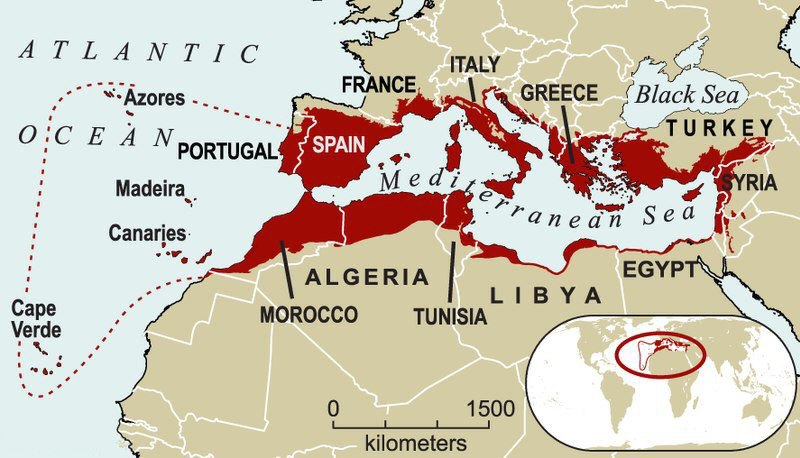
The Mediterranian Region (source: Wikipedia)
Core Principles of the Mediterranean Diet
The Mediterranean diet is primarily composed of carbohydrates from vegetables and fruits, unsaturated fats from olives and similar sources, and lean protein from poultry and fish. The specific macronutrient distribution depends on individual goals:
- A healthy individual may follow a breakdown of 50% carbohydrates, 30-35% fats, and 15-20% protein.
- For weight loss, carbohydrate intake can be reduced while protein and fat intake are increased, combined with a calorie deficit.
- In cases of cardiovascular disease or diabetes, a similar approach can be taken.
How Can I Eat Fats and Carbohydrates While Losing Weight?
This question highlights why the Mediterranean diet is both highly recommended and easy to follow. The carbohydrates in this diet primarily come from vegetables and fruits, which contain fiber that slows sugar absorption. Not all fruits and vegetables have the same sugar content—spinach, broccoli, and kale, for example, are low in sugar and high in fiber, as are strawberries, raspberries, and blueberries.
Bread is also common in Mediterranean cultures, but it is typically made from whole grains, which contain a high amount of fiber. Whole grain bread, bulgur, barley, and farro are staples in this diet, helping to regulate blood sugar and insulin levels.
The same principle applies to fats—not all fats are harmful. In fact, fats are essential for both energy production and structural functions in the body. The fats in the Mediterranean diet are primarily unsaturated, found in olives, nuts, and fish. These fats differ from the saturated fats found in red meat and trans fats found in processed foods like chips. Unsaturated fats help increase “good cholesterol” (HDL) while reducing “bad cholesterol” (LDL and VLDL), lowering the risk of heart disease.
Protein Sources in the Mediterranean Diet
Protein sources in this diet are diverse. Although saturated fats from meat and butter are generally limited, other slightly fattier protein sources are still recommended. Lean meats such as chicken and turkey (white meat) are common, while seafood is an easily accessible and frequent choice in Mediterranean countries. Greek yogurt, particularly the low-fat variety, is another excellent protein source, as are cheeses like feta or sheep’s cheese.

Can I Follow This Diet If I Don’t Live in the Mediterranean?
Absolutely! As mentioned earlier, this diet is based on principles that can be applied anywhere, rather than being restricted to the Mediterranean region. Let’s consider two examples:
- Bjorn from Scandinavia
Bjorn is a middle-aged man from Scandinavia with high blood pressure and excess weight. His goal is to lose weight and normalize his blood pressure using Mediterranean diet principles. Even though many Mediterranean ingredients are widely available, we can tailor his diet using local foods.- Protein: Cold-water fish such as cod and salmon, as well as cooked lentils.
- Fats: Omega-3-rich fish, avocado, olives, and olive oil.
- Carbohydrates: Vegetables such as bell peppers, zucchini, red onions, and berries, along with whole grains like brown rice and whole grain crackers.
By maintaining a daily intake below 2000 kcal for six months, Bjorn can expect weight loss, improved blood pressure, and better cholesterol levels.
- Abuya from Kenya
Abuya is a 43-year-old office worker from Kenya who has gained 15 kg (arround 33 lbs) over the past seven years. Her doctor prescribed lisinopril (10 mg) and atorvastatin (10 mg) for blood pressure and cholesterol management. He also recommended the Mediterranean diet.- Protein: Grilled tilapia, beans, and millet.
- Fats: Avocado, olive oil, peanuts, and cashews.
- Carbohydrates: Bananas, mangoes, kale, onions, and whole grains.
With a calorie intake of 1600 kcal per day and regular physical activity, Abuya can achieve weight loss and improved health markers.
Key Takeaways: How to Apply Mediterranean Diet Principles Anywhere
- Focus on natural sugars from vegetables and fruits
- Vegetables and fruits should be the foundation of every meal, particularly leafy greens and antioxidant-rich, low-sugar fruits like berries.
- Include legumes and whole grains like quinoa, beans, lentils, and bulgur.
- Get healthy fats from nuts and seeds.
- Choose high-quality protein sources
- Prioritize fish and seafood (at least twice a week), as well as lean poultry like chicken and turkey.
- Avoid processed meats like hamburgers, sausages, or salami.
- Incorporate plant-based protein sources such as legumes.
- Healthy fats are crucial
- Base your fat intake on unsaturated fats from olives, olive oil, avocados, nuts, and seeds.
- Additional sources include omega-3-rich fish.
- Whole grains over refined grains
- Choose whole grain bread, brown rice, and whole-wheat pasta instead of refined grains and sugary foods.
- Physical activity and social interaction
- Engage in moderate daily physical activity such as walking or gardening.
- Eating meals in a social setting improves mental health and reduces stress.
The Mediterranean diet is more than just a way of eating—it’s a lifestyle that can be adapted to any culture and age group. Whether you are managing cardiovascular issues, looking to lose weight, or simply wanting to improve your overall health, this way of eating is worth trying.
 The Hungry Pharmacist
Leave a comment