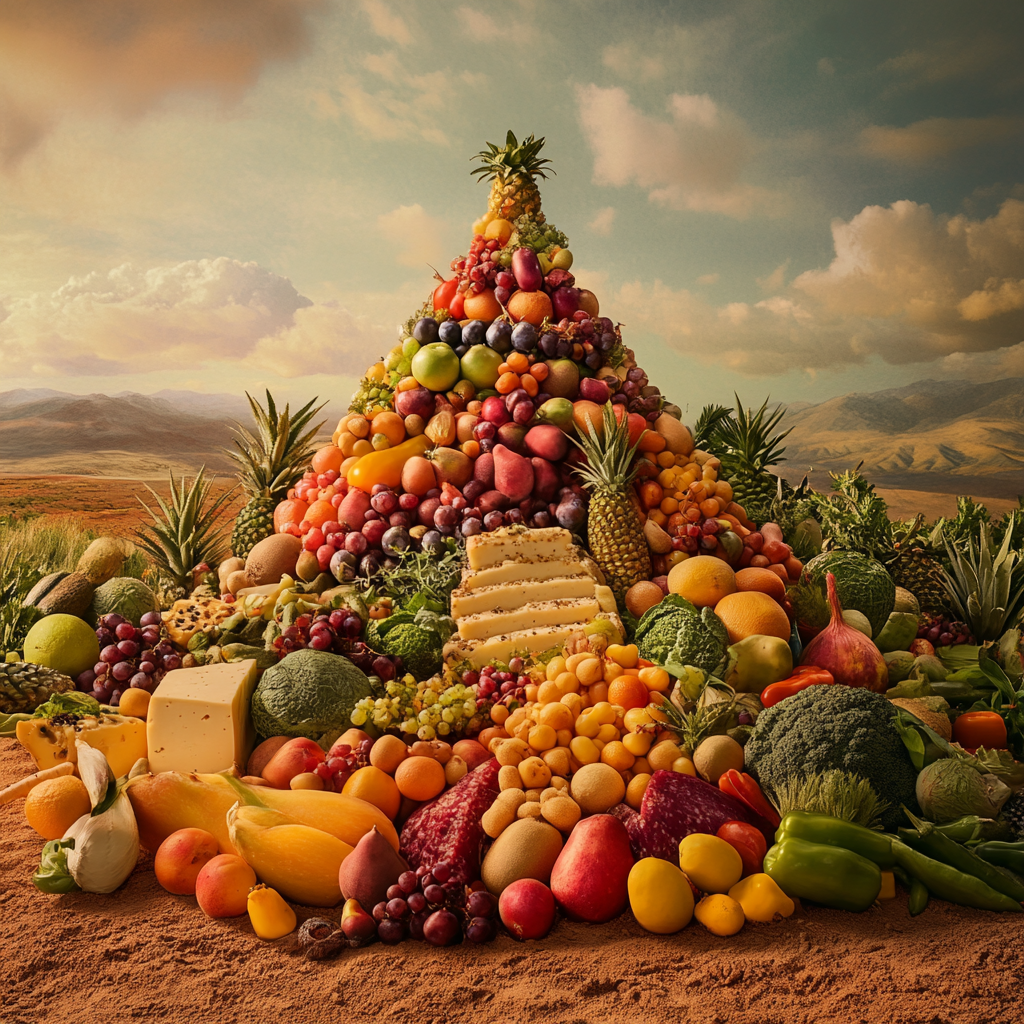
The next level of the food pyramid consists of dough and pastry. When people aim to lose weight, the first suggestion often involves cutting out pasta, along with sweets. You’ll often hear someone declare, “Starting tomorrow, I’m eliminating bread, pasta, potatoes, or rice.” This seems like a good step—I wouldn’t eat them too often either. However, for someone whose diet heavily relies on pasta, this can be very challenging to sustain long-term. Enthusiasm might keep you motivated for a few days, water weight (held by carbohydrates) might drop, and you could lose a few kilograms in the first week (sometimes even 3-4 kg).
But eventually, your body starts signaling that it misses all that dough. Your mind begins to wander, imagining scenes of sitting down to enjoy a plate of bolognese and a glass of wine in Tuscany, grabbing a portion of fries on the streets of Amsterdam, savoring the aroma of waffles in Brussels, or having a beer at Oktoberfest. You might even fantasize about devouring a Big Mac while cruising through Los Angeles. Sooner or later, people give in and start eating carbs again, often regaining the lost weight.
This type of eating is known as a low-carb or keto diet. While it can be beneficial in some cases (e.g., for individuals with high cholesterol), it’s challenging to maintain and highly demanding.
So, should you eat carbs from pasta, bread or potatoes? The answer is yes, but since it is higher on the food pyramid than vegetables, moderation is key. This means pasta shouldn’t make up your entire meal. Instead, combine it generously with other ingredients. For example, one slice of bread paired with cucumbers, cheese, and olives; a small portion of rice with broccoli, carrots, and chicken breast; and so on. How we prepare food also plays a big role.
Take potatoes as an example. Which form of potatoes contains the most calories:
- Boiled potatoes
- Baked potatoes
- French fries
If you answered French fries, you win the free privilege of reading this text to the end. Yes, French fries contain the most calories, carbohydrates, and trans fats, especially when eaten at restaurants where the oil used for frying has been reused so many times it could be sending its kids to preschool. So, be cautious about how you prepare your food.
Let’s consider bread. Whole-grain bread is different from white bread, as it contains more fiber, fewer carbohydrates, and more protein. Next time, think twice before choosing that tempting croissant over a slice of rye bread. The same goes for rice: brown rice is a better option than white rice.
Similarly, how we prepare and eat pasta will influence its effect on our body and weight management. I’ve come across pasta recipes so loaded with cheese, heavy sauces, and oil that I wonder how arteries don’t clog instantly. While these dishes may seem delicious, they’re caloric bombs, low in fiber, minerals, and vitamins. In contrast, protein-rich pasta cooked with tomatoes or vegetables, paired with lean meat or even seafood (e.g., salmon or shellfish), can be equally delicious and far healthier.
The Fourth Level – Proteins
Today, you’ll see various recommendations for protein intake, often promoted as a superfood for weight loss or muscle building. This mostly stems from the fact that proteins are difficult for the digestive system to break down, requiring more energy to digest. This means consuming proteins burns slightly more calories, enough to offset a small chocolate bar. Simple math.
Moreover, proteins are not absorbed 100% into the bloodstream. Due to digestion, about 75-80% of ingested proteins are actually absorbed. For example, if you consume 100 grams of protein, your body will absorb approximately 75-80 grams.
The WHO recommends a daily intake of 0.8-1 gram of protein per kilogram of body weight. For someone weighing 75 kg, this equates to around 60 grams of protein daily. For athletes or those looking to build muscle mass, this increases to 1 gram per kilogram of body weight.
Consider an 80 kg individual who trains four times a week and aims to build muscle. They would need about 80 grams of protein daily. How much chicken breast does that translate to?
The answer isn’t 80 grams but much more. 100 grams of chicken breast contain approximately 32 grams of protein, making it one of the best natural protein sources. Simple math shows that 250 grams of chicken breast would be required. Of course, proteins are not consumed solely in the form of meat. Other sources include yogurt, cheese, and other dairy products.
It’s entirely possible to meet your daily protein needs through a combination of dairy products, meat, and even protein powders.
What About Fats?
Fats are a complex group, historically stigmatized as the primary cause of cardiovascular disease. This notion is no longer entirely valid, as research has since uncovered many benefits of fats. However, as with most things, fats aren’t entirely harmless. It’s essential to pay attention to the type and amount of fats consumed.
Fats are calorie dense, providing about 7 kcal per gram. This means fatty foods are extremely rich in calories. This is true for all fats, whether from nuts or melted cheese. All fats are calorically equal, but some are “more equal” than others, as George Orwell might say.
Take cashews as an example. While they’re healthy, they’re also calorie dense. For instance, 100 grams of cashews contain about 550 kcal. If your daily calorie intake is 2,000 kcal, these 100 grams represent 25% of your total caloric allowance, leaving little room for other fats.
We’re often unaware of how much fat we consume daily or how energy-dense it is, which can significantly impact our body weight.
The Top of the Pyramid: The Forbidden Garden
This is the tip of the needle we prick ourselves with while sewing. Here we find foods meant for occasional consumption, such as birthdays, weddings, or anniversaries. Of course, it’s not necessary to be overly strict. Consuming these foods up to three times a week in moderation should be fine. However, for many of us, these foods form the foundation of our diet or are close to it.
What foods am I referring to? Sweets, cakes, snacks, chips, and alcohol.
I’ve already mentioned how carbohydrates in fruits and vegetables are bound to fiber, making them harder to digest and less likely to spike insulin. Similarly, I’ve discussed how fats are calorie-dense and require moderation. Snacks and sweets, however, combine both these traits, only on steroids.
Here’s an example: 100 grams of a common snack contains about 600 kcal, equivalent to 20 tomatoes, 32 grams of fat (equivalent to 150 grams of feta cheese), or 57 grams of carbohydrates (equal to two large apples).
Take another example, a chocolate bar with nuts. Per 100 grams, it contains 487 kcal, 24 grams of fat, and 63 grams of sugar.
The problem is that an average adult (or child) can eat these 100 grams in about 20 minutes. The second issue is that such foods are highly addictive, with their perfect balance of fats, sugars, and flavor enhancers creating cravings for more. Consuming just these two examples already equals 1,000 kcal—half a daily allowance for many people—and often leads to multiple servings.
Sugar cravings can cause our bodies to work against us, making insulin management crucial.
Conclusion
No food pyramid is perfect, and in a few years, this one may also see changes. Preparation methods, the foods we buy (ready-made), and the restaurants we eat at can all impact the accuracy of the pyramid. I’ve tried to illustrate how one food prepared differently can yield vastly different results.
Following the basic guidelines of the food pyramid can provide a foundation for a healthier lifestyle and reduce the risk of chronic diseases, many of which can be prevented through proper nutrition.
 The Hungry Pharmacist
Leave a comment