
Creating a meal plan for one person is not an easy task. Several parameters need to be considered during the process, and we are still unsure if the plan is correct. It often requires several adjustments, and it takes time to develop something we can call almost ideal. Now, imagine how difficult it is to create a plan for an entire population, a country, a region, or the entire planet. This is what we call the food pyramid.
History of the Food Pyramid
Throughout history, especially in recent times, there have been attempts to create food pyramids or basic guidelines on how populations should eat to prevent chronic diseases or poisoning. For example, if there is an increase in alcohol consumption in a population leading to higher rates of toxicity or liver cirrhosis, regulatory bodies, together with scientists, gather to provide dietary recommendations that the population should follow. Even though these recommendations exist, many people are unaware of them, ignore them, or believe they do not apply to them. As a result, the population becomes more obese, sicker, and healthcare costs increase.
The Evolution of Food Pyramids
Of course, not all food pyramids are ideal. They generally adjust according to new scientific discoveries, and based on new information, these pyramids evolve. The pyramid from fifty years ago is no longer relevant because new research has shown that consuming too many pasta dishes, especially those made with white flour, is not ideal for maintaining a lean figure. It leads to an excessive insulin release, which results in sugar being stored in fat cells. Additionally, water and fluids are now recognized as important factors for health, and should be a cornerstone of any food pyramid, rather than just an afterthought.
Why a Pyramid?
Factually speaking, since we represent the food pyramid on paper or some 2D surface, it is not technically a pyramid, but rather a triangle. However, let’s imagine the most famous pyramid in the world: the Great Pyramid of Giza in Egypt. When we look at the number of blocks in the pyramid, we see that the largest number of blocks is at the base. As we move up the pyramid, fewer blocks are needed at the top.
Similarly, the food pyramid works. At the base are foods that should be consumed daily in the largest quantities, just like the foundation of the Great Pyramid, which contains the most blocks. As you move up the pyramid, foods should be eaten less frequently and in smaller amounts.
These pyramids serve as guidelines, but they cannot be used as individual meal plans. Moreover, we cannot apply the same diet to all countries, as dietary habits differ. The bread made in Kenya is not the same as the doughnuts in Louisiana, or the rice grown in the fields of China compared to rice sold in Peru. For now, we will focus on the food pyramid for people living in the Western hemisphere. Additionally, it can vary individually. For example, we can’t recommend eating two bananas a day (200 calories) for someone who needs to be in a caloric deficit on a 1500-calorie plan. Instead, we might suggest 50 grams of blueberries, which contain about 30 calories.
What Does a Food Pyramid Look Like?
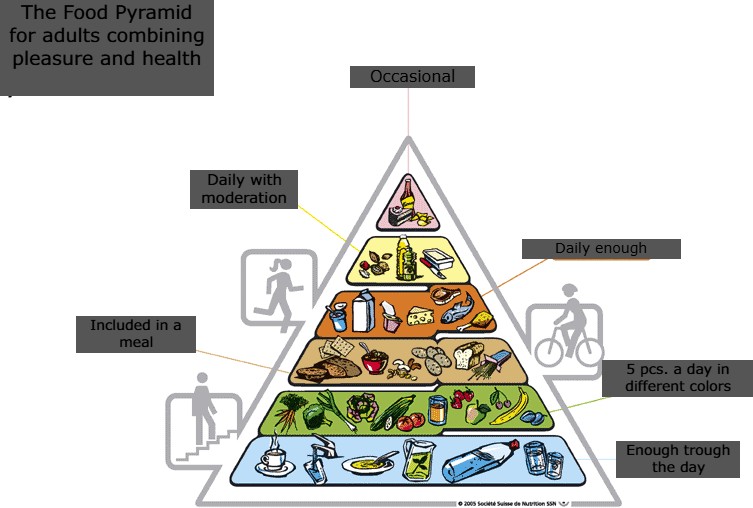
The current food pyramid starts with water or liquids at the base. These are the fluids that should be consumed daily, primarily water, but this category also includes teas, soups, and coffee (in moderation). Coffee here refers to simple espresso without milk or sugar, not a latte with whipped cream, which belongs higher up in the pyramid. This group excludes sodas, fruit juices (whether store-bought or freshly made), as they contain large amounts of sugar and should not be part of the basic diet but rather be considered occasional treats.
The next part of the pyramid, which represents the first section of “real food” and not just liquids, includes vegetables and fruits. From childhood, mothers have always tried to show us the importance of fruit in our diet. I remember how much I used to avoid certain vegetables—broccoli only entered my diet after the age of 25, carrots or cabbage were only eaten under the threat of starving, and I first tried avocado at 30.
For many of us, vegetables are not very appealing, and endless salads, boiled broccoli, or Brussels sprouts often seem bland compared to a medium-rare steak, hamburger, or fried chicken. Even with vegetables, we try to fry them or add cheese to make them more flavorful.
However, vegetables and fruits should make up a large part of our diet. It’s very important not only what we eat, but also how we prepare it. When it comes to vegetables, it’s worth noting that green vegetables like broccoli, cabbage, spinach, or kale generally have the least calories, while tomatoes or peppers may have slightly more. However, this caloric difference is minimal compared to other foods, so the choice of vegetable doesn’t matter too much. The rule is to eat about 25 different types of vegetables each week, which can be a tough task and, in some parts of the world, nearly impossible. That said, it is crucial to make an effort to include vegetables in our diet in various forms. It is important to prepare vegetables using whole foods and cook them, steam them, or, when possible, eat them raw.
Beware of Salads!
The way a salad is prepared can greatly affect its caloric density. Many of us associate salads with healthy eating or weight loss. But you can eat salad every day for breakfast, lunch, and dinner and still gain weight. Why? Because when we chop up vegetables for a salad, they are often not as tasty as we might expect, so we tend to add dressings, oils, or fatty cheeses to make them more interesting and palatable. This significantly increases the calorie content of the salad. For example, a tablespoon of olive oil contains more than 100 calories, and dressings, especially pre-made ones, often have high amounts of fats and sugars, further increasing the caloric density of the salad. Depending on the bowl size, one salad can contain up to 1200 calories, the same as a fast food meal. This means we haven’t achieved anything by eating salad, just given up on foods we enjoy in favor of vegetables.
Furthermore, making vegetable lasagnas, pizzas with vegetables, or melted cheese are not the types of vegetable dishes intended in the pyramid, as we don’t fully benefit from the vegetables and end up adding large amounts of fats and sugars. Vegetables are crucial for micronutrients, vitamins, minerals, antioxidants, and fiber, all of which are important for digestion, gut flora, and, consequently, our immune system. If we fry, mix them with fats or sugars, or overcook them, we lose the full benefits of these foods.
Fruit
Fruit should also be consumed throughout the day, ideally combined with vegetables. The recommendation is about two pieces of fruit per day. For smaller fruits like strawberries or raspberries, one serving is considered one handful. Fruit is also interesting from a sugar perspective, as it contains fructose, which is metabolized differently than glucose. Metabolically, fructose is processed by the liver, which can struggle with it. But why is this important?
When you eat a medium-sized apple containing about 14 grams of sugar, you’re not just consuming sugar. The sugar is encapsulated within fiber, so it is absorbed more slowly into the bloodstream, avoiding a sharp spike in insulin. You also get water, minerals, and vitamins. Additionally, the average person can only eat up to three apples at once, which would amount to about 40-45 grams of sugar. At that point, you’re likely full and may even feel slightly nauseous. However, if you juice those apples, the fiber is lost, and you might drink the equivalent of five apples in a few sips. Without the fiber, the sugar enters the bloodstream quickly, causing a rapid rise in blood sugar and insulin levels, which leads to fatigue and drowsiness. There is a clear difference in how fruit is consumed, and it’s important to eat whole fruit.
This was the first part of our Food Pyramid. If you liked it stay tuned for the second part, and don´t forget to share your comments and thoughts on these article.
If you really really, and I mean really liked, so that you can´t sleep, thinking about the blog, than feel free to share it with your friends on social networks.

 The Hungry Pharmacist
Leave a comment